
Section 12 What Sense Perfected Part IV
I knew this section would take a while, but I didn't realize how long.

Section 12 Part IV
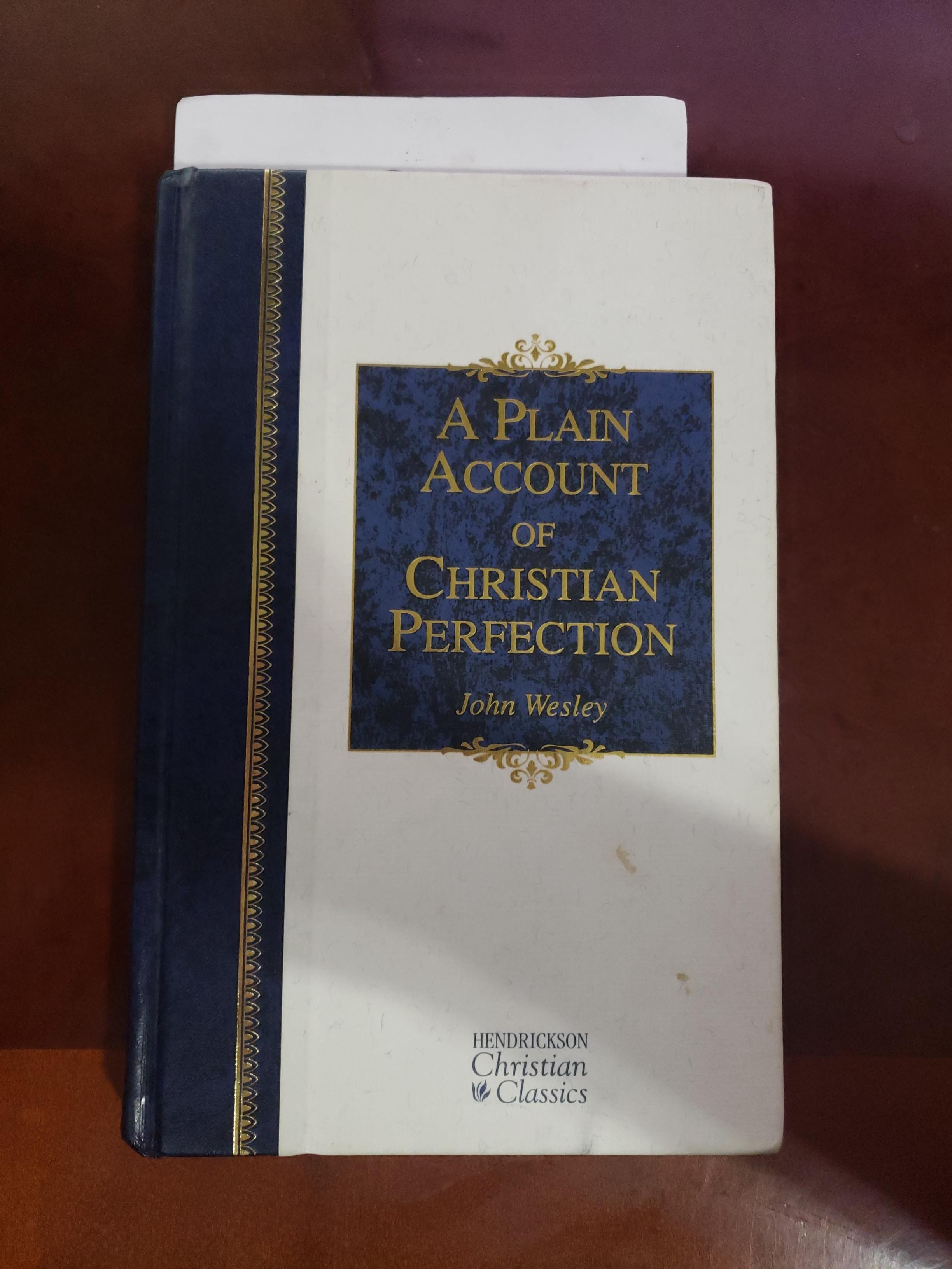
I’ll open this section part the same way I closed the last section part. I don’t have all the answers. My instant answer to the paragraph on page 23 is that this is exactly what people do, in that, “…the apostles themselves committed sin.” Yes, they did, and so do we, I say. But then Wesley expressly tells us that’s not his point, and he exclaims we shouldn’t hold that position at all. To make things worse, Wesley then quotes from scripture where James says as much.
1Let not many of you become teachers, my brethren, knowing that as such we will incur a stricter judgment.
2For we all stumble in many ways. If anyone does not stumble in what he says, he is a perfect man, able to bridle the whole body as well.
James 3:1–2 (NASB95)
9With it we bless our Lord and Father, and with it we curse men, who have been made in the likeness of God;
James 3:9 (NASB95)
To make matters worse, worse, Wesley immediately says, “True.” p. 23.
Wesley’s attempt to reconcile this is to claim he is talking about the “many masters or teachers whom God had not sent.” p. 23. The problem is that it isn’t what James is talking about. Jame’s point isn’t talking about other masters or people. James is telling us to make sure we ourselves aren’t putting ourselves into many roles where we are in charge of other people. It’s important because those who rise to positions of authority are held to a higher standard by God, and we should hold them accountable at a higher level, too, given that many people look to them for leadership. I mean, that idea is right there in James 3:1. Sadly, I cannot read this lengthy paragraph any other way but that Wesley badly misunderstood this passage of scripture in James.
He goes on to quote John, who also expounds on how everyone sins when he says that if we say we have none, we deceive ourselves.
8If we say that we have no sin, we are deceiving ourselves and the truth is not in us.
9If we confess our sins, He is faithful and righteous to forgive us our sins and to cleanse us from all unrighteousness.
10If we say that we have not sinned, we make Him a liar and His word is not in us.
1 John 1:8–10 (NASB95)
Wesley takes this scripture to make three points upon which he concludes that Christians are perfect. Again, I think he is missing something. Either Wesley is, or I am. Given who John Wesley was, I’m willing to accept that I’m missing something in his point.
Having read through these three points in light of the above scripture numerous times, I continue to conclude that we have a difference between the flesh and the spirit here. Perhaps my confusion is that I am conflating the two, where Wesley has them firmly separated into clearly defined roles in his head, and I do not. But, with that concept in mind that John is talking about both the flesh and the spirit when he mentions sinning or not sinning and going without sinning any more, I can only conclude it is the spirit inside us that goes and sins no more, while the flesh continues to sin and needs Christ’s forgiveness over and over.
