
Week 11 Understanding the Burden

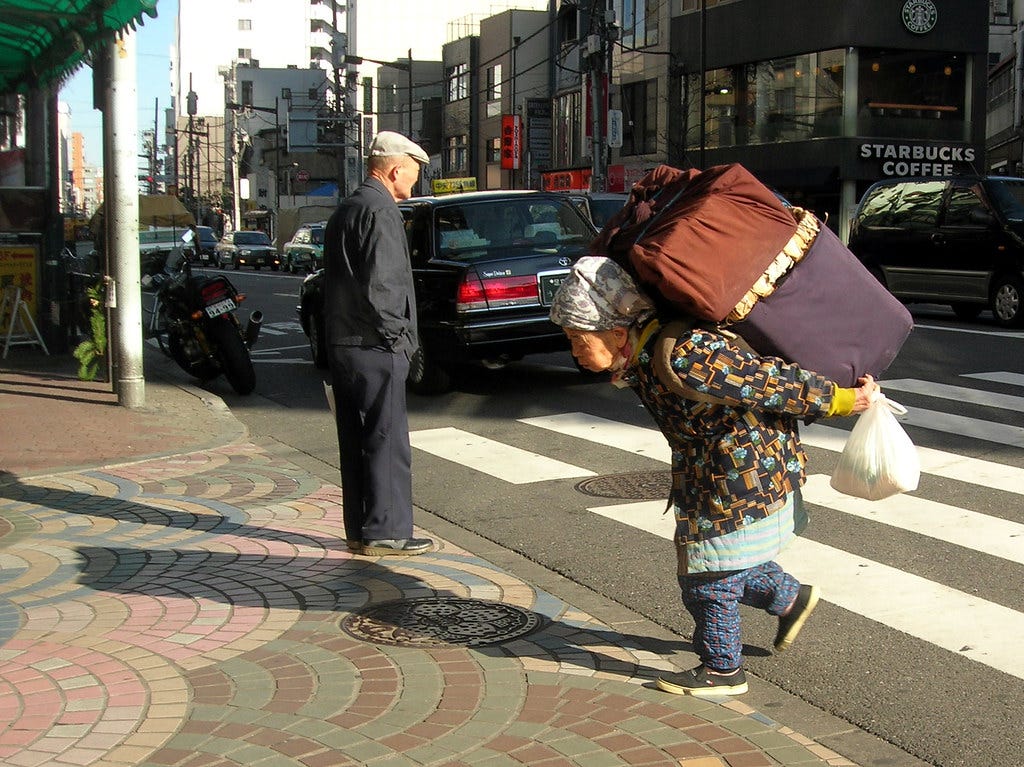
“O most grateful burden, which comforts them that carry it! The burdens of earthly masters gradually wear out the strength of those who carry them; but the burden of Christ assists the bearers of it, because we carry not grace, but grace us.”
Saint John Chrysostom
Today’s Passage
1Brethren, even if anyone is caught in any trespass, you who are spiritual, restore such a one in a spirit of gentleness; each one looking to yourself, so that you too will not be tempted.
2Bear one another’s burdens, and thereby fulfill the law of Christ.
3For if anyone thinks he is something when he is nothing, he deceives himself.
4But each one must examine his own work, and then he will have reason for boasting in regard to himself alone, and not in regard to another.
5For each one will bear his own load.
Galatians 6:1–5 (NASB95)
Background
Quotes are summarized from Wikipedia. Passage summaries are from Biblehub.com by Jay Smith, with permission. Scripture comes from LOGOS software under license.
Quote-John Chrysostom (/ˈkrɪsəstəm, krɪˈsɒstəm/; Koine Greek: Ἰωάννης ὁ Χρυσόστομος, romanized: Iōánnēs ho Chrysóstomos, IPA: [i.oˈannis o xryˈsostomos]; Latin: Ioannes Chrysostomus, Ecclesiastical Latin: [joˈannes kriˈzɔstomus]; c. 347 – 14 September 407) was a Church Father who served as Archbishop of Constantinople. He is known for his preaching and public speaking, his Divine Liturgy of Saint John Chrysostom, and his ascetic sensibilities.
He is honored as a saint in the Catholic, and Eastern churches, as well as in some others. The Eastern Orthodox, together with the Byzantine Catholics, hold him in special regard as one of the Three Holy Hierarchs (alongside Basil of Caesarea and Gregory of Nazianzus). Along with them and Athanasius of Alexandria he is also regarded by the Catholic Church as one of the four Great Greek Church Fathers.
Passage-The book of Galatians is a Pauline Epistle (letter from Paul). It was written by the Apostle Paul about 49 A.D. prior to the Jerusalem Council which had taken place in 50 A.D. This quite possibly could have been Paul’s first letter. The key personalities of this book are the Apostle Paul, Peter, Barnabas, Abraham, Titus, and false teachers. Paul writes this book to deal with the problem of circumcision and Jewish legalism toward Gentile believers.
Opening Statement
Burdens and hardships don’t feel comforting when they are upon us. Maybe that’s because we don’t see them as preparing us for a greater task.
Ask: What is “the law of Christ” from verse two of Today’s Passage?
Point: To love one another. Please read the following:
33“Little children, I am with you a little while longer. You will seek Me; and as I said to the Jews, now I also say to you, ‘Where I am going, you cannot come.’
34“A new commandment I give to you, that you love one another, even as I have loved you, that you also love one another.
35“By this all men will know that you are My disciples, if you have love for one another.”
John 13:33–35 (NASB95)
Ask: What does that have to do with Today’s Passage?
Point: It is how we help bear one another’s burdens. Please re-read verse 1 from Today’s Passage:
1Brethren, even if anyone is caught in any trespass, you who are spiritual, restore such a one in a spirit of gentleness; each one looking to yourself, so that you too will not be tempted.
Galatians 6:1 (NASB95)
Ask: How does verse one answer the question of what loving one another has to do with understanding burdens being born?
Point: It explains how we are to love one another, “in a spirit of gentleness.”
Ask: What does that mean to “bear one another’s burdens”, “in a spirit of gentleness”?
Point: To understand that, we have to understand what type of burden Paul was talking about, which is in the first part of verse 1 from Today’s Passage, but from the King James this time. Please re-read verse 1 from Today’s Passage:
1Brethren, if a man be overtaken in a fault, ye which are spiritual, restore such an one in the spirit of meekness; considering thyself, lest thou also be tempted.
Galatians 6:1 (KJV 1900)
Ask: Does using the word “fault” instead of “burden” help?
Point: Let’s look at the Greek word being used. Please see the Definitions page.
Ask: The Greek root word suggests faults and burdens are when we “fall away”. Fall away from what?
Point: From the Word and ways of God.
Ask: If we are supposed to carry each other’s burdens as verse one says, why does verse five tell us to carry our own loads?
Point: Read it in the future tense in that we will carry our own load meaning we will stand before God for our own sins. Please read the following:
10But you, why do you judge your brother? Or you again, why do you regard your brother with contempt? For we will all stand before the judgment seat of God.
11For it is written, “As I live, says the Lord, every knee shall bow to Me, And every tongue shall give praise to God.”
12So then each one of us will give an account of himself to God.
13Therefore let us not judge one another anymore, but rather determine this—not to put an obstacle or a stumbling block in a brother’s way.
Romans 14:10–13 (NASB95)
Isaiah 45:23
Ask: So, then why are we told in verse 4 that we are to examine our own work without paying attention to the things someone else has done?
Point: For the same reason that we will stand or fall before the Lord for the things we’ve said and done, and not for what someone else has said or done. Please read the following:
8we are of good courage, I say, and prefer rather to be absent from the body and to be at home with the Lord.
9Therefore we also have as our ambition, whether at home or absent, to be pleasing to Him.
10For we must all appear before the judgment seat of Christ, so that each one may be recompensed for his deeds in the body, according to what he has done, whether good or bad.
2 Corinthians 5:8–10 (NASB95)
Ask: How does our carrying our own burdens and understanding we are responsible for our own actions help us understand the burden of another?
Point: Because we know what we’ve gone through and when we understand our difficulties, we have a better shot at understanding someone else’s burdens.
Ask: So, how does all that translate to carrying and understanding someone else’s difficulties in gentleness?
Point: We put ourselves in their shoes to empathize with their hardship, and then help them the way we would want to be helped as many times as it takes. Please read the following:
16For a righteous man falls seven times, and rises again, But the wicked stumble in time of calamity.
17Do not rejoice when your enemy falls, And do not let your heart be glad when he stumbles;
18Or the Lord will see it and be displeased, And turn His anger away from him.
Proverbs 24:16–18 (NASB95)
Closing Statement
The righteous falls seven times. But don’t stop reading there or you miss the point…and rises again. Rise again, always rise again. This is why the saints are so important, why you and I carrying someone’s burden in gentleness is important. We will all stumble eventually. If I don’t treat someone else gently when they need help because they failed, how can I expect someone else to treat me gently? When those around us see us help someone with gentle kindness, they know if we come to help them what to expect. That’s the point of understanding our own burdens, and how we are expected to understand and help someone else with their burdens.
Tasks for the Week
Task 1: Make a list of all the things you consider burdens in your life right now.
Task 2: Evaluate how someone else might be able to help you with one or more of those things.
Task 3: Consider who you know who might be able to help you with those things.
Task 4: Pray about the things you’ve listed as burdens.
Task 5: Understand that everyone you know has a similar list and consider either sharing your list with someone else, or asking them how you can help them with their “list”.
Definitions
All definitions come from Dictionary.com
All Greek entries are from James Strong as listed in the LOGOS software attributed as WORDSearch 2020
Greek Strong’s Number: 3900
Greek Word: παράπτωμα
Transliteration: paraptōma
Phonetic Pronunciation: par-ap’-to-mah
Root: from <G3895>
Cross Reference: TDNT - 6:170,846
Part of Speech: n n
Vine’s Words: Fall, Fallen, Falling, Fell, Trespass
Usage Notes:
English Words used in KJV:
trespass 9
offence 7
sin 3
fall 2
fault 2
[Total Count: 23]
From <G3895> (parapipto); a side-slip (lapse or deviation), i.e. (unintentional) error or (willful) transgression:- fall, fault, offence, sin, trespass.
James Strong, “Παράπτωμα,” in Strong’s Talking Greek and Hebrew Dictionary (WORDsearch, 2020).
Greek Strong’s Number: 3895
Greek Word: παραπίπτω
Transliteration: parapiptō
Phonetic Pronunciation: par-ap-ip’-to
Root: from <G3844> and <G4098>
Cross Reference: TDNT - 6:170,846
Part of Speech: v
Vine’s Words: Fall, Fallen, Falling, Fell
Usage Notes:
English Words used in KJV:
fall away 1
[Total Count: 1]
From <G3844> (para) and <G4098> (pipto); to fall aside, i.e. (figurative) to apostatize:- fall away.
Greek Strong’s Number: 3896.